


June 12, 2026

Exclusive insights from behind the scenes at Fashion Week — Experience the pulse of the runway, where designers, models, and visionaries bring fashion’s boldest ideas to life.

Cultural Event

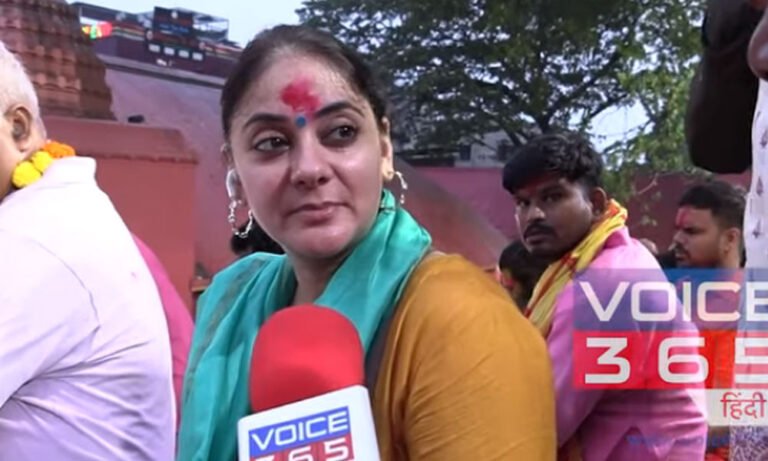
Singer Priyanka Bharali Faces Backlash After Selfie Controversy at Chabua Bihu Stage

Sports

All

Sushmita Dev Says Political Future Lies in Assam, Cites TMC’s Post-Defeat Situation Behind Exit
One Year After Air India AI171 Crash, Delay in Final Probe Report Draws Questions
Congress Marches to Delhi Under Jitu Patwari’s Leadership Over Meenakshi Natarajan Row
Historic Progress on Assam-Nagaland Border Dispute Opens New Path for Development: Himanta Biswa Sarma

GUWAHATI: Former Rajya Sabha MP and ex-Trinamool Congress leader Sushmita Dev has said that her political future lies in Assam, explaining that her decision to quit the Trinamool Congress (TMC) was influenced by the situation within the party following its electoral setback in West Bengal.

Speaking about her resignation, Dev said she did not believe in retaining a Rajya Sabha seat after leaving the party that had nominated her. She stated that while she had the option to continue, she chose not to do so.

Rejecting suggestions that she left the party out of fear after an electoral defeat, Dev said election victories and losses are a part of politics. She clarified that her decision was not linked to Mamata Banerjee’s defeat but to the internal circumstances that emerged within the party afterwards.

Dev said she had doubts about how effectively the Trinamool Congress could expand its influence and sustain its political strength outside West Bengal. According to her, these concerns became more prominent after observing developments within the party following the election.

Emphasising her long-term political plans, Dev said any future electoral contest would have to be from Assam, particularly from the Barak Valley region, including Silchar. She noted that her political activities and aspirations are centred on Assam, which played a key role in her decision to part ways with the Trinamool Congress.

The former Silchar MP also clarified that she had not made any statement against TMC supremo Mamata Banerjee and maintained that her decision was based on political considerations related to her future in Assam.

Sushmita Dev resigned from both the Trinamool Congress and the Rajya Sabha earlier this week, triggering speculation about her next political move. She has since reiterated that her focus remains on Assam and its political landscape.

AHMEDABAD: One year after the tragic crash of Air India Flight AI171 in Ahmedabad, questions are being raised over the delay in the release of the final investigation report into India’s deadliest aviation disaster in a decade.

The crash occurred on June 12, 2025, when the London-bound Boeing 787-8 Dreamliner crashed just seconds after take-off from Ahmedabad’s Sardar Vallabhbhai Patel International Airport. The accident claimed 260 lives, including 241 of the 242 people on board and 19 people on the ground at the B.J. Medical College hostel complex. One passenger survived the crash.

The Federation of Indian Pilots (FIP) has expressed concern over the prolonged investigation and opposed the release of any incomplete or interim findings. Addressing a press conference in Ahmedabad, FIP President C.S. Randhawa questioned why the investigation into a flight that lasted only around 32 seconds remained incomplete after a year.

The pilots’ body argued that releasing a partial report could fuel speculation and public confusion. It has called for a comprehensive and transparent investigation before any conclusions are made public.

According to the preliminary findings released earlier by the Aircraft Accident Investigation Bureau (AAIB), both engines lost power after the aircraft’s fuel control switches moved from the “RUN” position to “CUTOFF,” interrupting fuel supply to the engines. However, investigators have not yet determined whether the switch movement resulted from human action, technical malfunction, or any other factor.

The delay in the final report has also prompted legal action. The Federation of Indian Pilots and Pushkar Raj Sabharwal, father of late Captain Sumeet Sabharwal, have approached the Supreme Court seeking an independent probe under judicial oversight into the circumstances surrounding the crash.

With families of victims still awaiting definitive answers, aviation experts and stakeholders continue to seek clarity on the cause of the disaster and the reasons behind the delay in the publication of the final investigation report.

NEW DELHI: The Congress on Friday staged a protest in the national capital under the leadership of Madhya Pradesh Congress Committee (MPCC) President Jitu Patwari over the rejection of senior party leader Meenakshi Natarajan’s Rajya Sabha nomination from Madhya Pradesh.

According to Congress leaders, a delegation from Madhya Pradesh sought to meet President Droupadi Murmu to submit a memorandum on the issue. The party claimed that a large number of workers and leaders joined the protest in Delhi.

After the delegation was reportedly not granted an audience with the President, Congress workers intensified their demonstration and attempted to march towards Rashtrapati Bhavan. Security personnel stopped the protesters, and several leaders and workers were detained by police during the protest.

Speaking on the issue, Congress leaders described the agitation as a peaceful and democratic protest against what they termed an injustice in the rejection of Natarajan’s nomination papers. The party has alleged that democratic institutions are being undermined and has demanded intervention in the matter.

The controversy stems from the rejection of Meenakshi Natarajan’s nomination for the Rajya Sabha election from Madhya Pradesh, a move that has triggered protests and legal challenges by the Congress.

Authorities maintained that adequate security arrangements were in place and that the situation remained under control.

New Delhi, June 12: Assam Chief Minister Himanta Biswa Sarma on Thursday described the newly signed tripartite agreement between the Centre, Assam and Nagaland as a historic step towards resolving long-standing issues linked to the Assam-Nagaland border dispute and unlocking the region’s vast hydrocarbon potential.

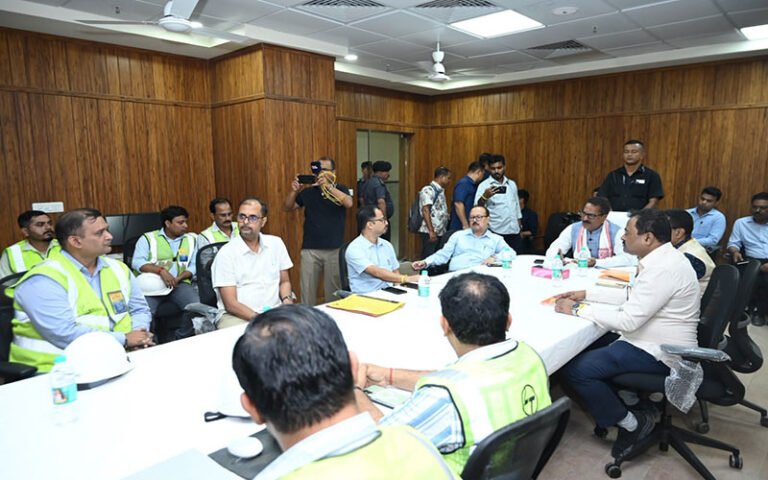
Speaking at the signing of a Memorandum of Understanding (MoU) in the presence of Union Home Minister Amit Shah and Union Petroleum and Natural Gas Minister Hardeep Singh Puri, Sarma said the decades-old border dispute between Assam and Nagaland has remained a complex issue, with disputed areas divided into five sectors identified as Areas A, B, C, D and E.

The Chief Minister noted that portions of the disputed land are currently under the administrative control of both states, creating challenges in the utilisation of valuable natural resources located in the region. He said the administrative complexities had prevented the effective exploitation of hydrocarbon reserves for many years.

Highlighting the significance of the agreement, Sarma said both Assam and Nagaland have agreed to cooperate in facilitating the extraction of oil and gas resources and share the benefits arising from royalty and revenue generated through hydrocarbon production. He credited the Union Ministry of Home Affairs, particularly Union Home Minister Amit Shah, for bringing the two states together to reach the understanding.

Sarma said the agreement comes at a crucial time when India is seeking to reduce its dependence on imported hydrocarbons amid global energy uncertainties. He expressed confidence that the arrangement would be implemented in both letter and spirit and would contribute to the nation’s energy security while ensuring benefits reach the people living in the border areas.

The Assam Chief Minister also assured full cooperation from his government in resolving any future disagreements related to operational areas through dialogue and mutual understanding. He stressed that both states are committed to ensuring that development and prosperity reach local communities through the responsible utilisation of natural resources.

Referring to the broader Assam-Nagaland border dispute, which is currently before the Supreme Court, Sarma appealed for an amicable settlement either through judicial or negotiated means. He said a lasting resolution would enable the people of both states to prosper without conflict and create a more conducive environment for development.

Sarma thanked Nagaland Chief Minister Neiphiu Rio for working closely with Assam on several common issues and expressed hope that the agreement would further strengthen ties between the people of the two neighbouring states.

The tripartite MoU, signed in New Delhi, establishes a framework for facilitating petroleum exploration and production activities in identified areas along the Assam-Nagaland boundary. The agreement is expected to enhance investment in the upstream energy sector, support hydrocarbon exploration and contribute to India’s long-term energy security goals. The Centre has described the pact as a major example of cooperative federalism and a significant step towards unlocking the economic potential of the Northeast.

New Delhi, June 11: Prime Minister Narendra Modi has reflected on one of the most challenging moments of his political career, recalling that he faced the aftermath of the Godhra train burning incident just days after becoming a Member of the Gujarat Legislative Assembly in 2002.

Speaking at a public event, Modi said he was elected as an MLA for the first time on February 24, 2002, and entered the Gujarat Assembly for the first time on February 27. He noted that his tenure as an MLA was only three days old when news of the Godhra train tragedy began to emerge.

Recounting the events of that day, the Prime Minister said he was attending proceedings in the Assembly when reports started coming in about a train being set on fire in Godhra. Concerned by the developing situation, he decided to travel to the site immediately.

Modi said he initially planned to travel via Vadodara and then take a helicopter to Godhra. However, he was informed that no suitable helicopter was available. He recalled insisting on travelling in a single-engine helicopter despite objections, stating that he was willing to take responsibility for the journey in order to reach the affected area as quickly as possible.

Describing the scene at Godhra, Modi said witnessing the large number of victims was deeply painful. He added that while he was emotionally affected by the tragedy, he understood that his position demanded composure and responsibility.

“I am also a human being and felt the pain like anyone else. But I knew I was holding a position that required me to rise above emotions and focus on my duty,” he said.

Highlighting the challenges he encountered early in public life, the Prime Minister remarked that his political journey had been marked by difficult circumstances from the very beginning. He also pointed to his continued public service over the past 24 years, saying that despite numerous challenges, he has remained committed to serving the people.

The Godhra train burning incident on February 27, 2002, remains one of the most significant and controversial events in Gujarat’s modern history, triggering widespread communal violence across the state.