Guwahati, October 31, 2026: India’s efforts to build a stronger and more independent satellite navigation network received a significant boost after the Indian Space Research Organisation (ISRO) successfully launched the NVS-03 navigation satellite aboard its GSLV-F18 rocket on Friday night. The achievement drew congratulations from political leaders, including Assam Chief Minister Dr Himanta Biswa Sarma and Health Minister Ashok Singhal.
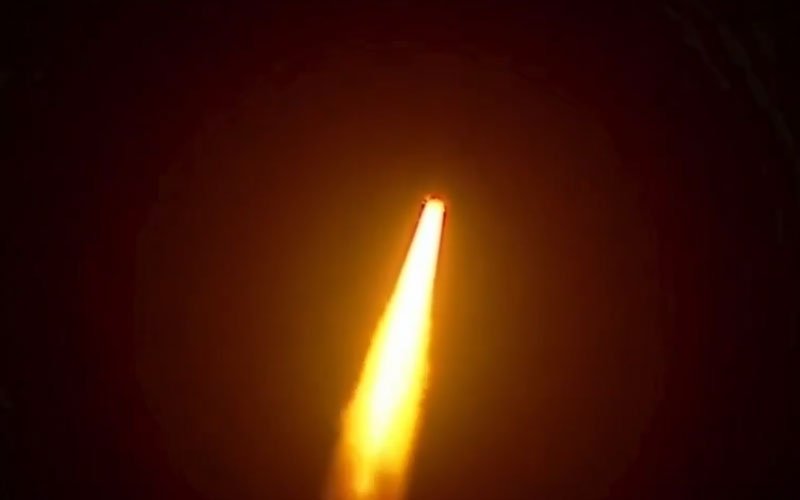
The rocket lifted off at 11:51 PM on October 30 from the Second Launch Pad at the Satish Dhawan Space Centre in Sriharikota, Andhra Pradesh, carrying the next-generation satellite intended to reinforce India’s indigenous navigation system, NavIC.
ISRO subsequently confirmed that NVS-03 had been successfully placed into its intended Geosynchronous Transfer Orbit (GTO), completing a major phase of the mission.
Ashok Singhal Congratulates ISRO Scientists
Assam Health and Family Welfare Minister Ashok Singhal congratulated ISRO scientists and engineers on the achievement, highlighting its importance for technological self-reliance and national security.
In a social media post on Saturday, Singhal described the launch as an important step towards restoring and strengthening the functionality of India’s indigenous navigation system.
He said the mission would enhance precision navigation capabilities and contribute to the country’s strategic self-reliance under the Atmanirbhar Bharat initiative.
Prime Minister Modi Praises Successful Mission
Prime Minister Narendra Modi also congratulated ISRO’s scientific and engineering teams, describing the mission as an important development in India’s pursuit of technological independence.
The Prime Minister said the new satellite would strengthen NavIC and support improved navigation services for citizens while advancing India’s capabilities in critical space technologies.
Assam Chief Minister Himanta Biswa Sarma welcomed the achievement, saying it would reduce reliance on foreign satellite navigation systems and contribute to the operational capabilities of India’s armed forces.
NVS-03 to Enhance India’s Satellite Navigation Network
The GSLV-F18 mission marked the 20th flight of India’s Geosynchronous Satellite Launch Vehicle and carried the third satellite in the country’s next-generation navigation satellite series.
NVS-03 has been designed to support the continued availability of services under the Indian Regional Navigation Satellite System (IRNSS), popularly known as Navigation with Indian Constellation (NavIC).
The satellite carries both indigenously developed and procured atomic clocks, which are essential for maintaining the precise timing required by satellite navigation systems.
It also supports the L1 frequency band alongside the existing L5 and S-band signals, potentially improving compatibility with a wider range of navigation receivers.
NavIC is designed to provide positioning, navigation and timing services across India and an area extending approximately 1,500 kilometres beyond the country’s borders.
Mission Expected to Support Civilian and Defence Applications
The successful placement of NVS-03 into its designated orbit represents an important step towards strengthening India’s independent positioning and navigation infrastructure.
NavIC technology supports applications ranging from transportation and maritime navigation to location-based services, emergency response and strategic operations.
An indigenous satellite navigation network is particularly important for national security, as it gives India greater control over essential positioning and timing services without relying entirely on foreign-operated systems.
ISRO Chairman Dr V Narayanan acknowledged the contributions of scientists, engineers and other teams involved in the mission.
Although the satellite has reached its intended transfer orbit, further orbital manoeuvres and operational checks are required before its navigation services can be fully commissioned.
The successful GSLV-F18 launch nevertheless marks another achievement for India’s space programme and provides momentum to efforts to strengthen the country’s indigenous navigation capabilities.