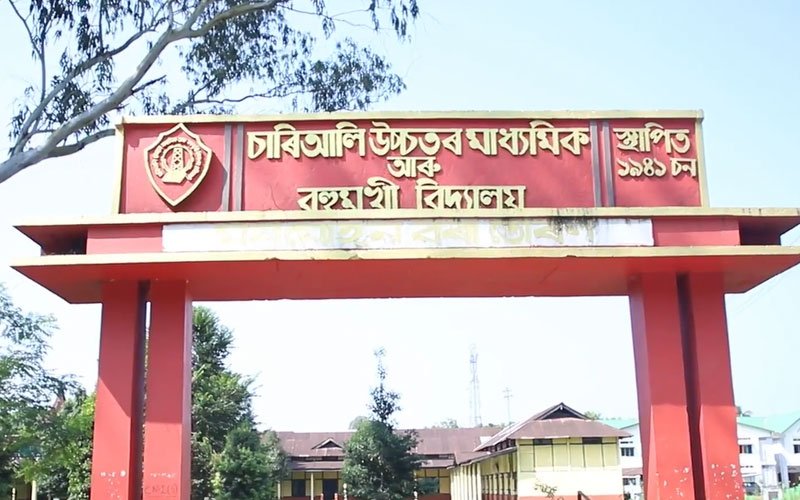
Biswanath, October 26, 2026: One of Biswanath district’s oldest educational institutions has received a major infrastructure upgrade, with Assam Education Minister Dr. Ranoj Pegu highlighting the ₹8 crore transformation of Chariali Higher Secondary and Multipurpose School.
The institution, which has served the region for more than eight decades, has undergone remodelling aimed at providing an improved educational environment while preserving its long-standing legacy.
Sharing details of the development on Monday, Pegu said that a total of ₹8 crore had been spent on transforming the school, which continues to play an important role in the educational development of Biswanath.
Established in 1941, the institution was founded through the efforts and contributions of several local philanthropists, including Nabin Chandra Bhattacharya, Chandrakanta Barua, Jagyeswar Barthakur and Kunjanath Hazarika.
Over the years, the school expanded its academic activities, achieving higher secondary status in 1963 before being provincialised in 1977.
Spread across approximately 28 bighas and 3 kathas of land, Chariali Higher Secondary and Multipurpose School currently has 595 students enrolled, according to the minister’s update.
The institution operates under the leadership of Principal Swapna Bora Das, supported by 28 teachers and five other staff members responsible for its academic and administrative activities.
Offering higher secondary education in both Arts and Science streams, the school has educated thousands of students over the decades, many of whom have subsequently established careers in different professional fields.
The institution’s infrastructure development has also attracted attention in recent months. A newly constructed school building was formally inaugurated earlier this year as part of wider efforts to improve educational facilities in Biswanath district.
Highlighting the school’s historical importance, Pegu expressed hope that the upgraded institution would continue making a meaningful contribution to education in the region and provide greater opportunities for future generations of students.
The transformation marks another development in efforts to strengthen educational infrastructure in Assam while supporting established institutions that have served local communities for decades.