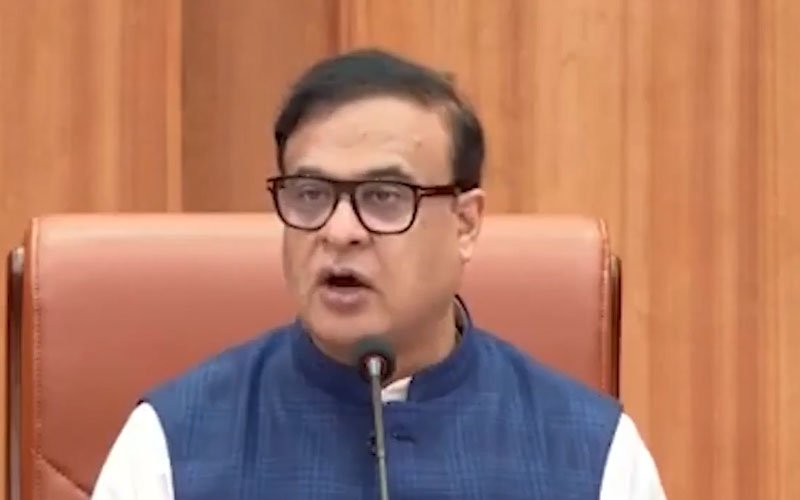
Assam is seeking to attract a larger share of national and international investment by leveraging its geographical location, connectivity and emerging technology sectors, with Chief Minister Himanta Biswa Sarma highlighting the state’s potential at a series of business and policy events in New Delhi.
Addressing the second edition of the ICC Global Business Summit, Sarma called on investors and the global business community to examine opportunities in Assam. He pointed to the state’s position between South Asia, Southeast Asia and East Asia, along with its international borders with Bhutan and Bangladesh, as factors that could strengthen its role as a gateway to the wider ASEAN region.
The Chief Minister said the changing global economic environment was creating opportunities for India to expand its participation in international supply chains and global value networks. He also emphasized the growing importance of eastern and northeastern India in the country’s next phase of economic expansion.
Sarma highlighted Assam’s improving links with domestic and international markets and presented the state as an emerging location for connectivity, enterprise and investment. His pitch to investors came as the state seeks to expand beyond its traditional economic sectors and attract investment in manufacturing and technology-driven industries.
A major part of his discussions in New Delhi centred on Assam’s developing semiconductor ecosystem. Speaking to industrialists and other stakeholders on the sidelines of SEMICON India 2026 at Yashobhoomi, Sarma highlighted the Tata Electronics semiconductor assembly, testing and packaging (OSAT) facility being developed at Jagiroad. The facility is scheduled for commissioning in December, according to current reports.
Sarma said the state government was working to support the project through policy measures, institutional assistance and frameworks intended to facilitate investment. He said the Jagiroad facility is expected to have the capacity to produce 48 million chips a day and could generate around 27,000 direct and indirect employment opportunities once operational.
The Chief Minister also spoke about the wider possibilities emerging around the semiconductor industry, including chip design, fabrication, advanced packaging, equipment, materials, research and workforce development. He said Assam could eventually develop a broader semiconductor ecosystem covering multiple stages of the industry if the necessary investment and supporting infrastructure are established.
The Assam government has separately identified electronics and semiconductors as an emerging investment sector and describes the Jagiroad OSAT facility as a major component of the state’s semiconductor ambitions.
Sarma’s engagements in the national capital also included participation in the two-day conference titled “Financing India’s Journey Towards Viksit Bharat” at Bharat Mandapam. The conference, organised by the Union Ministry of Finance, brought together chief ministers, deputy chief ministers, finance ministers and senior officials from states and Union Territories to discuss financial and policy priorities linked to India’s development goals.
The discussions covered areas including public investment, mobilisation of private capital, Centre-State coordination and the financing requirements of long-term development. Issues relevant to Assam included economic growth, agricultural transformation and renewable energy, with the conference providing a platform to examine possible financing pathways for sustainable and inclusive development in the state.
The Chief Minister’s recent engagements in New Delhi therefore brought together two strands of Assam’s development strategy: attracting private investment into emerging industries such as semiconductors and engaging in wider discussions on financing infrastructure and economic growth.
With the Tata Electronics facility at Jagiroad expected to add a significant semiconductor manufacturing and packaging capability, Assam is seeking to use the project as a foundation for attracting related industries and building a wider electronics manufacturing ecosystem in the Northeast.