
ABU DHABI: The United Arab Emirates has announced the immediate suspension of all trade, commercial exchanges and financial transactions with Iran, marking a sharp deterioration in relations between the two neighbouring Gulf nations as regional tensions intensify.
The decision was announced by the UAE Ministry of Foreign Affairs on Tuesday, with officials saying the suspension would remain in effect until further notice due to escalating security concerns in the region.
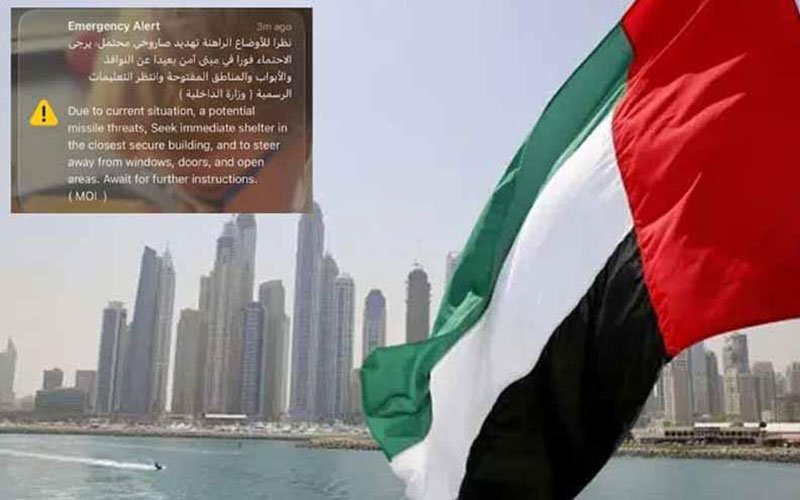
The move came shortly after UAE residents received an emergency mobile alert warning of a possible missile threat and advising people to seek shelter inside the nearest secure building. The warning was withdrawn a short time later after authorities reassessed the situation.
According to the UAE government, its air defence systems detected two ballistic missiles allegedly launched from Iran. Emirati authorities said both missiles were assessed to have been aimed at maritime navigation in Gulf waters, with one falling outside the country’s territorial waters and the other landing within UAE waters before both ended up in the sea.
Iran, however, rejected the accusation. Iranian Foreign Ministry spokesperson Esmaeil Baqaei said Tehran had not launched missiles toward the UAE and described the Emirati allegations as harmful to regional trust and diplomatic efforts.
The latest confrontation follows weeks of growing concern over maritime security in the Strait of Hormuz, one of the world’s most strategically important shipping routes. The UAE has repeatedly accused Iran of being behind attacks on vessels linked to the Abu Dhabi National Oil Company (ADNOC), whose tankers have faced multiple incidents while operating in the waterway.
Relations between Abu Dhabi and Tehran had briefly shown signs of improvement after a memorandum of understanding reached in June helped reduce hostilities. During that period, the UAE reported a pause in direct attacks, even as tensions continued elsewhere in the Gulf. That understanding later collapsed, leading to renewed instability across the region.
Since the wider Middle East conflict began on February 28, the UAE has been among the countries most heavily affected by missile and drone attacks, according to Emirati officials. Thousands of projectiles were reported to have targeted the country during the conflict, placing significant pressure on its air defence systems and critical infrastructure.
The dispute has also renewed attention on the Strait of Hormuz, the narrow maritime passage through which ships departing UAE ports must travel to reach international waters. Iran has maintained that the strategic waterway will remain closed until a broader peace agreement is reached with the United States, while Washington and Gulf nations have continued to call for unrestricted navigation.
With the suspension of economic ties now formally announced, trade relations between the UAE and Iran face renewed uncertainty as diplomatic tensions and security risks continue to reshape the geopolitical landscape of the Gulf.