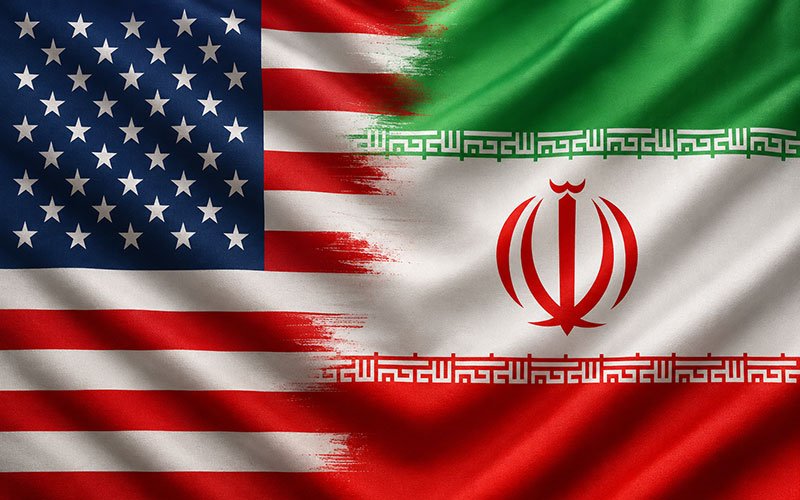
The latest phase of the US-Iran confrontation is unfolding far beyond missile strikes, military threats and tensions around the Strait of Hormuz. An increasingly important front has emerged online, where unverified claims, manipulated images and viral social media posts are influencing public perceptions of the conflict.
As diplomatic efforts to secure a ceasefire remain uncertain, information circulating across social media platforms is adding another layer of complexity to an already volatile situation.
One recent incident illustrates how quickly an unverified online claim can move from an obscure social media account into mainstream political discourse.
According to a report by The New York Times, an anonymous account on X, reportedly operating from India, posted a dramatic claim on August 5 concerning Iran’s nuclear ambitions. The post alleged that Brig. Gen. Ahmad Vahidi, a senior commander of Iran’s Islamic Revolutionary Guard Corps, had said Tehran would continue seeking nuclear weapons as long as Israel and the United States maintained their own arsenals.
The post was accompanied by a photograph of Vahidi and an AI-generated image depicting a nuclear mushroom cloud, giving the claim the appearance of a major breaking development.
However, the statement had not been independently verified. Despite that, the post reportedly gained traction rapidly, moving beyond its original online audience and eventually appearing in discussions in Israel and the United States.
The claim was also cited publicly by Israeli Prime Minister Benjamin Netanyahu and later shared by Mike Waltz, the Trump administration’s ambassador to the United Nations, according to The New York Times.
The episode highlights the growing role of social media in modern conflicts, where information can travel across borders within minutes and reach political leaders before its authenticity has been firmly established.
For audiences following the US-Iran confrontation, the challenge is therefore no longer limited to separating military developments from political statements. Determining whether viral claims, photographs and alleged quotations are genuine has become an increasingly important part of understanding the conflict.
The spread of such material could also complicate diplomatic efforts, particularly at a time when negotiations over a possible ceasefire remain sensitive and vulnerable to sudden shifts in public and political sentiment.
The incident serves as another reminder that in an era of AI-generated imagery and rapidly spreading social media content, an unverified post can acquire significant influence long before reliable evidence emerges.