
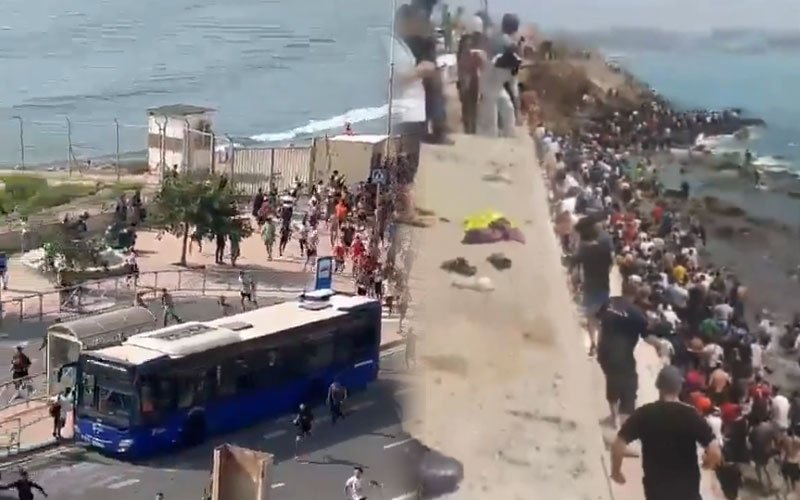
Ceuta (Spain): Spain is facing a fresh migration crisis after thousands of migrants crossed into the Spanish enclave of Ceuta from neighbouring Morocco on Thursday, overwhelming border authorities and prompting local leaders to demand tougher security measures, including the deployment of the army.
Officials on the ground described the situation as unprecedented, with security personnel saying the border had become impossible to control as large numbers of migrants entered the territory within hours. Most of those crossing were reportedly young Moroccan men, though families, women and children were also among the arrivals.
Videos from the Tarajal border area showed crowds making their way into Ceuta on foot, while some migrants were seen reaching Spanish territory via coastal breakwaters. Human rights groups in northern Morocco described the mass movement as an exceptional event, saying the border appeared to have been opened under unusual circumstances.
Despite growing pressure from Ceuta’s regional government, Spain’s Interior Ministry said a national emergency cannot be declared solely on the basis of migration flows under existing legislation. The ministry, however, assured that authorities are taking all necessary steps to protect public safety and maintain the integrity of the country’s borders.
Madrid also confirmed that it is coordinating closely with Moroccan authorities to contain the situation. According to the ministry, Moroccan security forces are preventing additional crossings, while both countries are working together to facilitate the return of migrants who entered Ceuta illegally.
Spanish Interior Minister Fernando Grande-Marlaska is scheduled to visit Ceuta on Friday to assess the situation and oversee the government’s response.
The latest developments come just a day after a spike in attempts to reach the enclave by sea. Officials and activists reported that at least three migrants died on Wednesday while trying to swim to Ceuta from Morocco’s northern coastline.
Authorities have not identified the exact reason behind the sudden surge in crossings. Some officials have linked the increase to a recent Spanish Supreme Court ruling that strengthened legal protections for migrants arriving by sea. However, migrant rights groups have questioned that explanation, arguing that many migrants were unlikely to have been aware of the court’s decision.
Meanwhile, Ceuta’s regional administration has warned that reception facilities are operating beyond capacity, with hundreds of newly arrived migrants reportedly forced to sleep outdoors due to overcrowding.
The situation has drawn comparisons with the May 2021 border crisis, when more than 8,000 migrants entered Ceuta within two days amid diplomatic tensions between Spain and Morocco. That episode followed Spain’s decision to provide medical treatment to Polisario Front leader Brahim Ghali, a move that strained relations with Rabat.
Located on the northern coast of Africa, Ceuta is one of Spain’s two autonomous enclaves bordering Morocco and serves as one of the European Union’s external frontiers. The territory has long been a key gateway for migrants seeking entry into Europe, making it a recurring hotspot in the region’s migration challenges.