
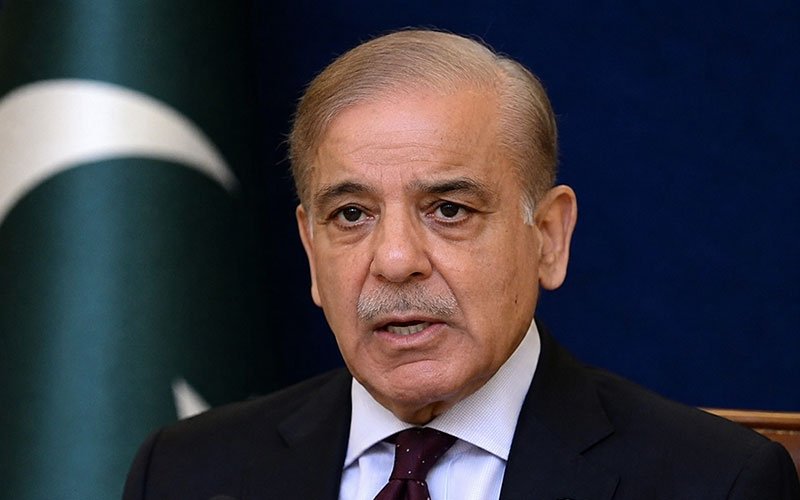
Islamabad: Pakistan Prime Minister Shehbaz Sharif has issued a fresh warning to India over the future of the Indus Waters Treaty, saying Islamabad would respond directly to any move that threatens what it considers its water rights under the agreement.
Speaking at an event in Islamabad, Sharif said Pakistan wanted peace but cautioned that its preference for peaceful relations should not be interpreted as weakness. He declared that every drop of Pakistan’s water was a “red line” and warned that Islamabad would respond if its interests were challenged.
Sharif also criticised New Delhi’s decision to place the 1960 Indus Waters Treaty in abeyance, describing India’s move as unilateral and accusing it of acting against Pakistan’s interests.
The latest remarks come amid continuing tensions between the two neighbouring countries following India’s decision in April 2025 to hold the treaty in abeyance after the deadly Pahalgam terror attack. The Government of India announced that the treaty would remain in abeyance until Pakistan credibly and irrevocably ends its support for cross-border terrorism.
Signed in 1960 with the World Bank playing a key role in its negotiation, the Indus Waters Treaty established a framework for sharing the waters of the Indus river system between India and Pakistan. Under the arrangement, the eastern rivers—Ravi, Beas and Sutlej—were allocated for India’s unrestricted use, while Pakistan received rights over the western rivers—Indus, Jhelum and Chenab—with certain provisions allowing both countries limited uses of rivers allocated to the other side.
The treaty survived several periods of conflict and strained relations between the two countries and became one of the longest-running mechanisms governing their water relationship.
India’s decision to place the agreement in abeyance has since emerged as a major point of contention. New Delhi has linked the move to concerns over cross-border terrorism, while Pakistan has rejected the suspension and continued to insist that the treaty remains legally binding. The legal status and implications of India’s “abeyance” decision have also become subjects of international discussion.
The dispute has implications beyond diplomatic rhetoric because the Indus river system is critical to Pakistan’s agriculture, water supply and wider economy. Any sustained uncertainty over the management and flow of the rivers therefore carries significant strategic and economic implications for both countries.
Pakistan has repeatedly raised the treaty issue at international forums, while India has maintained that the agreement cannot be considered in isolation from its security concerns.
Sharif’s latest comments add to a series of increasingly firm statements from Islamabad on the issue. His warning comes at a time when relations between the two nuclear-armed neighbours remain sensitive, with water sharing now closely linked to broader disputes over security and cross-border terrorism.
The latest development is expected to keep the Indus Waters Treaty at the centre of India-Pakistan diplomatic tensions, particularly as both sides continue to maintain sharply different positions over the future of the decades-old agreement.