Kathmandu: With hundreds of victims still unidentified and the condition of recovered bodies rapidly deteriorating, Nepalese authorities have begun preparations to bury unclaimed remains while preserving DNA records for possible identification in the future.
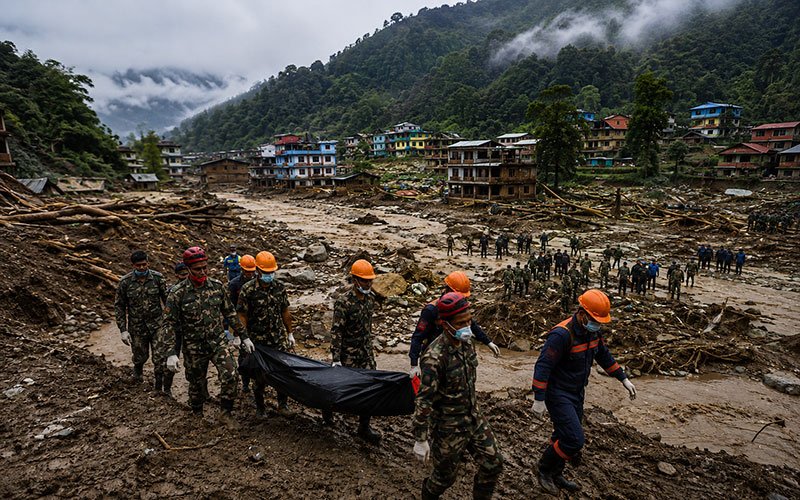
At least 675 bodies have been recovered following the devastating flash floods that swept through parts of Nepal on Wednesday, sending torrents of water and mud through villages and urban areas. Chitwan district, located in southern Nepal along the Indian border, has reported the highest number of recovered bodies, with 233 victims so far.
The large number of bodies has placed severe pressure on local hospitals and temporary storage facilities. In Chitwan, authorities reportedly converted a house into a temporary cooling facility to preserve the remains, but the available space soon became insufficient.
Health officials have warned that the advanced decomposition of bodies and the strong odour from temporary storage sites could create public-health concerns. Following those warnings, district authorities decided to proceed with burials for bodies that remain unidentified or unclaimed.
DNA Samples Being Preserved Before Burial
Authorities are taking DNA samples from the bodies before burial to ensure that families may still be able to identify their missing relatives later.
Each recovered body is being assigned a unique identification or reference number, along with records indicating where it was found. Officials say these records will allow a particular body to be located and recovered if a future DNA match confirms its identity.
More than 100 bodies had undergone DNA profiling by Saturday afternoon, with those remains subsequently prepared for burial.
Burial Sites Designed for Future Exhumation
Officials are taking special measures to ensure that buried victims can be retrieved if they are identified later.
Burial pits are being dug approximately 1.5 metres deep, while around 40 centimetres of space is being left between individual bodies. The remains are being placed in marked bags carrying their identification numbers.
Concrete platforms and signboards will also be installed at burial locations to record the corresponding identification numbers. Authorities plan to photograph and video the burial process and record the precise locations using geo-tagging.
Families Can Still Search for Missing Relatives
The burial process will not prevent families from claiming the remains later. People searching for missing relatives can submit DNA samples at designated hospitals across Nepal.
Once the samples are processed, the country’s health authorities will compare them with DNA collected from unidentified bodies. If a match is established, officials will use the body’s identification number to trace its burial location through police records.
The identified remains can then be exhumed and formally handed over to the family.
Nepalese police have also published information about unidentified and unclaimed bodies through a dedicated website to help families searching for missing people.
Despite the recovery efforts, the scale of the disaster remains significant. Officials say 2,426 people are still missing, including hundreds of foreign nationals.