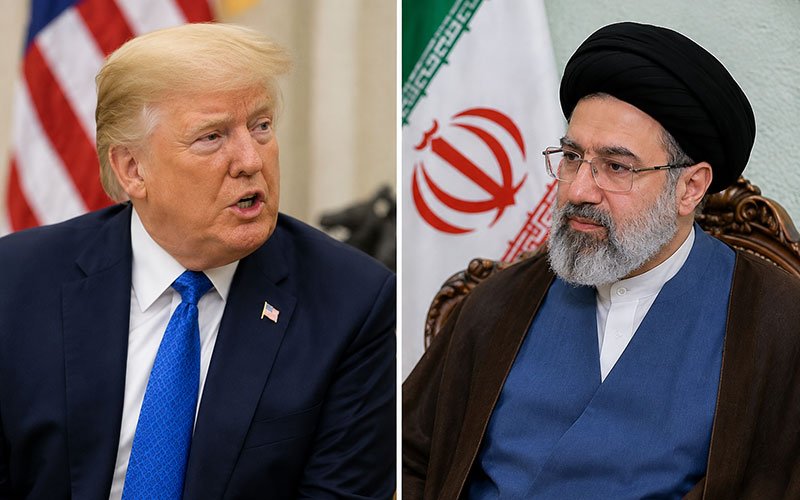
TEHRAN, Aug 25: Iran has responded defiantly to Washington’s latest sanctions initiative, with senior officials insisting that the country is prepared to counter increased economic pressure and that major trading partners will not simply follow US demands.
The reaction came after US Treasury Secretary Scott Bessent announced a new round of measures aimed at tightening pressure on Iran’s economy and limiting its access to international trade and financial networks.
According to the announcement, countries and businesses that continue significant economic dealings with Iran could face restrictions affecting their access to the dollar-based financial system. However, the US administration has not yet identified the countries or companies that could be directly targeted, nor has it announced a specific timeline for the wider measures to take effect.
The Treasury Department separately imposed sanctions on 60 individuals, companies and vessels. Notably, the announced list did not include Chinese financial institutions, despite China’s importance as one of Iran’s biggest economic and oil trading partners.
Iran Rejects US Pressure Campaign
Iranian Parliament Speaker Mohammad Bagher Ghalibaf dismissed Washington’s latest warnings, arguing that the United States lacks the economic leverage to dictate how other countries conduct their international trade.
In a message posted on X, Ghalibaf said Iran had received indications from its trading partners that they were not treating the latest US statements as a decisive factor in their relations with Tehran.
Iranian Economy Minister Ali Madanizadeh also maintained that the country had prepared for the possibility of tougher sanctions.
Speaking to state television, Madanizadeh accused Iran’s adversaries of attempting to intensify economic pressure but said Tehran possessed its own tools to respond. He further claimed that China and Russia had not accepted the US approach and suggested that other countries could also resist Washington’s pressure.
Warnings of Wider Retaliation
The escalating economic confrontation has also been accompanied by fresh warnings from Iranian officials regarding possible military and energy-related responses.
Iran has previously indicated that any major threat to its infrastructure or strategic interests could trigger retaliation, including actions affecting vital US interests and key energy routes in the region.
Brigadier General Hossein Mohebbi, a spokesperson for Iran’s Islamic Revolutionary Guard Corps, reportedly warned that attacks on Iranian infrastructure could lead to strong countermeasures targeting strategic interests and important energy chokepoints.
Tehran has also raised the possibility of further disruption to oil exports from the Gulf, adding to concerns about the potential impact of the conflict on global energy markets.
Conflict Shows Few Signs of a Diplomatic Breakthrough
The latest sanctions announcement comes as the conflict involving Iran, the United States and Israel continues without a clear diplomatic settlement.
Nearly six months after US and Israeli strikes on Iranian targets, major military exchanges have reportedly slowed in recent weeks. However, tensions remain high, particularly over attacks on commercial shipping routes in the Gulf and the Red Sea.
The Trump administration appears to be relying increasingly on economic pressure as part of its broader strategy against Tehran. Iran, however, has spent decades under multiple layers of US and international sanctions, which have caused significant economic hardship without forcing a fundamental change in the country’s leadership or strategic posture.
Although the conflict has reportedly weakened parts of Iran’s conventional military capability, Tehran is still believed to retain significant missile and drone capabilities. These assets could potentially be used against targets in the Gulf region or to threaten commercial shipping through the strategically important Strait of Hormuz.
Uncertainty also continues to surround the condition of Iran’s nuclear programme, which remains one of the central issues behind the continuing confrontation between Tehran, Washington and its regional allies.
As both sides harden their positions, the latest US sanctions push and Iran’s warnings of retaliation raise the possibility that the economic battle could further intensify alongside the continuing regional security crisis.