
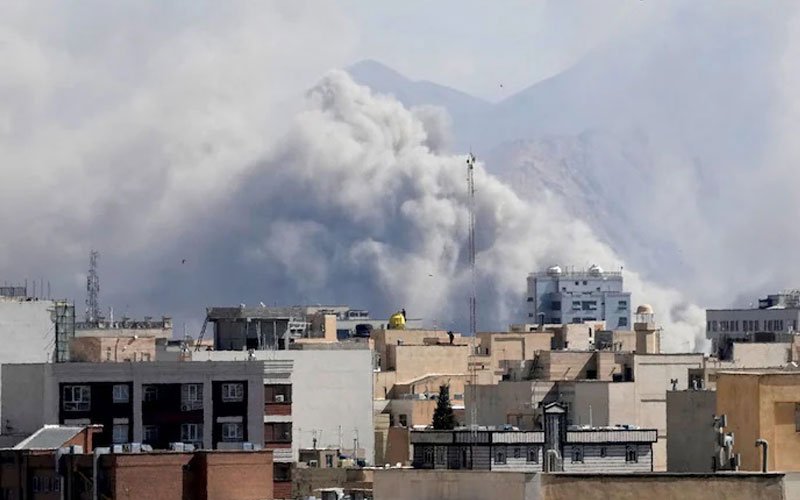
Washington/Tehran, November 3, 2026: Diplomatic efforts to ease the prolonged conflict between the United States and Iran have encountered another challenge after American forces carried out limited military strikes on Qeshm Island, a strategically important Iranian territory near the Strait of Hormuz.
The operation, which reportedly took place on Monday, November 2, came just hours after senior US officials expressed optimism about a possible negotiated settlement with Tehran.
American officials described the strikes as defensive measures rather than the beginning of another major military campaign. Nevertheless, the incident has raised concerns about renewed hostilities in a region already facing months of conflict and significant disruptions to international shipping.
Multiple Explosions Reported on Iranian Island
Residents of Qeshm Island reportedly heard several explosions as military activity unfolded in the area.
Iran’s official news agency IRNA reported that five blasts occurred in quick succession, while witnesses described seeing aircraft operating over the island.
The Wall Street Journal first reported the American operation, citing unnamed US officials familiar with the military action.
Reuters subsequently quoted an American official confirming that US forces had conducted strikes on Qeshm Island.
Although the operation was acknowledged by US officials speaking anonymously, its precise targets and the resulting damage remained unclear.
Iranian authorities had not released a comprehensive assessment of the incident at the time of the initial reports.
US Officials Describe Operation as Defensive
According to American officials, the strikes were intended to counter Iranian military threats in the Strait of Hormuz.
One official told Reuters that US forces had targeted Iranian activity involving surface-to-air missiles directed against American military assets.
Other reports indicated that Iranian forces had fired at a US aircraft, prompting a defensive response.
The Wall Street Journal also reported that American forces had conducted several smaller operations against Iranian targets in recent weeks.
Unlike previous large-scale military campaigns, these actions were reportedly not publicly announced, with officials seeking to avoid signalling an immediate return to extensive combat operations.
The Pentagon referred questions about the latest incident to US Central Command, which oversees American forces operating in the Middle East.
CENTCOM had not immediately provided a detailed public explanation.
Strait of Hormuz Remains a Major Security Concern
Qeshm Island occupies a strategically important location near the entrance to the Strait of Hormuz, one of the world’s busiest energy transportation corridors.
The waterway connects the Persian Gulf with the Gulf of Oman and international shipping routes.
Oil-producing countries in the region depend heavily on this passage to export petroleum and liquefied natural gas to global markets.
Military infrastructure on Qeshm Island has previously drawn attention because of its proximity to commercial shipping routes and regional naval operations.
The island has also been targeted during earlier phases of the US-Iran conflict.
Shipping restrictions and attacks involving vessels in the Strait of Hormuz have already affected international energy supplies.
Further military confrontations could complicate efforts to restore maritime traffic and stabilise global oil markets.
Netanyahu Reportedly Calls for Stronger Action Against Tehran
The latest strikes have emerged amid reports of discussions between US President Donald Trump and Israeli Prime Minister Benjamin Netanyahu over the future of military operations against Iran.
According to Axios, Netanyahu recently urged Trump to consider restarting major strikes against Iranian targets following the November 3 US midterm elections.
However, the American president reportedly preferred allowing diplomatic negotiations more time before committing to another extensive military operation.
The reported differences highlight the competing priorities facing Washington as it balances pressure from Israel with efforts to negotiate an agreement with Iran.
The White House and Netanyahu’s office declined to publicly discuss the details of their reported conversation.
Trump Suggests Iran Agreement Remains Possible
Despite the latest developments, President Trump has continued to indicate that a diplomatic solution could still be reached.
Speaking to reporters on Monday, the US president played down suggestions that he was preparing to resume major military attacks immediately after the midterm elections.
His remarks followed renewed diplomatic contacts aimed at reducing hostilities between Washington and Tehran.
US Vice President JD Vance also expressed optimism about the possibility of reaching a negotiated agreement.
However, significant disagreements remain, including questions involving Iran’s military capabilities, regional security and the future of maritime operations in the Strait of Hormuz.
The continuation of limited military activity alongside diplomatic discussions underscores the fragile nature of the ongoing negotiations.
Global Oil Prices React to Developments
The conflict surrounding the Strait of Hormuz has created significant volatility in international energy markets.
Oil prices declined by more than seven percent on Monday as renewed diplomatic activity encouraged hopes of a possible settlement.
However, prices recovered slightly in early Tuesday trading following reports of the American strikes on Qeshm Island.
Market participants remain concerned that another escalation could prolong restrictions affecting petroleum shipments from the Gulf region.
Any further deterioration in regional security could increase pressure on transportation costs and energy-importing economies.
Uncertainty Continues Over Next Phase of US-Iran Conflict
The latest military activity has renewed questions about the direction of American policy toward Iran.
While Washington has characterised the strikes as limited defensive operations, their timing has attracted particular attention because of continuing diplomatic discussions and the US midterm elections.
The situation also presents challenges for regional governments seeking to prevent another expansion of the conflict.
For now, it remains uncertain whether the latest confrontation will lead to additional military action or whether diplomatic negotiations will help reduce tensions.
The international community will be closely watching developments around Qeshm Island and the Strait of Hormuz as Washington and Tehran consider their next steps.