
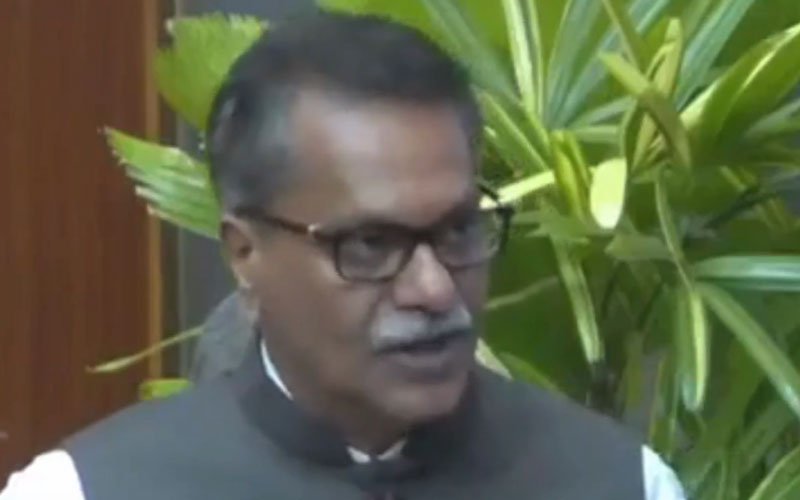
Guwahati: With the monsoon season heightening the risk of Japanese Encephalitis (JE) across Assam, Health & Family Welfare and Medical Education & Research Minister Ashok Singhal on Wednesday called for greater public participation in preventing the disease, stressing that government efforts alone cannot eliminate the seasonal health threat. Addressing the Assam Legislative Assembly, the Minister urged citizens to eliminate mosquito breeding sites, use mosquito nets, maintain cleanliness, and seek immediate medical attention if symptoms appear.
Highlighting the current disease burden, Singhal informed the House that Assam has reported 147 cases of Acute Encephalitis Syndrome (AES) so far this season, including 10 deaths, while 137 patients have recovered. He said the government is intensifying preventive measures to minimise fatalities through early diagnosis, timely treatment, and widespread vaccination.
Explaining the nature of the disease, the Minister said Japanese Encephalitis is one of the leading causes of AES and warned that delays in treatment can be life-threatening. He advised people experiencing fever accompanied by symptoms such as confusion, excessive drowsiness, abnormal behaviour, seizures, or difficulty in speaking to visit the nearest government health facility without delay instead of attempting treatment at home.
Singhal also sought to dispel misconceptions about the disease, clarifying that JE spreads only through the bite of an infected Culex mosquito. He explained that mosquitoes acquire the virus after feeding on infected birds or pigs, which act as natural hosts, and subsequently transmit it to humans. He emphasised that the infection does not spread directly from pigs to humans or from one person to another.
According to the Minister, Assam remains vulnerable to Japanese Encephalitis because of its heavy monsoon rainfall, extensive paddy cultivation, waterlogged areas, and favourable conditions for mosquito breeding. These environmental factors, coupled with the presence of natural hosts in several rural areas, contribute to a seasonal rise in cases during the monsoon and post-monsoon months.
Outlining the government’s strategy, Singhal said the state’s response is centred on five key measures—vaccination, mosquito control, early detection of suspected cases, prompt treatment and referral, and robust surveillance with rapid response. He noted that JE vaccination has been incorporated into the routine immunisation programme for newborns, while adult vaccination drives are also being conducted in vulnerable districts.
Tackling Japanese Encephalitis requires a whole-of-society approach.
While the Government is working proactively to prevent JE, I urge every citizen to eliminate mosquito breeding sites, maintain cleanliness, use mosquito nets and seek early medical attention for symptoms.
My… pic.twitter.com/al88EwIm7t
— Ashok Singhal (@TheAshokSinghal) July 9, 2026
The Minister informed the Assembly that preparations for the current AES-JE season began in February. Nodal officers have been appointed in every district, coordination mechanisms have been strengthened across medical colleges and district hospitals, ICU beds have been reserved for JE and AES patients, and standard operating procedures have been issued to healthcare institutions. He added that adequate stocks of medicines and oxygen are available to handle emergencies.
Singhal further stated that the government provides financial assistance of up to ₹1 lakh for eligible JE patients undergoing treatment at private hospitals. However, he urged people to seek timely care at well-equipped healthcare facilities, warning that delays in referral after initial treatment at inadequately equipped hospitals can reduce the chances of survival.
Providing an update on vaccination efforts, the Minister said JE immunisation campaigns have already been completed in Dhubri, Sribhumi, Bongaigaon, Charaideo, Majuli, and Sonitpur, while vaccination drives are currently underway in Barpeta (including Bajali), Nalbari, Darrang, Kamrup, and Karbi Anglong. He reaffirmed the government’s commitment to ensuring that every newborn receives the JE vaccine under the routine immunisation programme.
Concluding his address, Singhal reiterated that Japanese Encephalitis is a vaccine-preventable disease and said reducing its impact requires active cooperation between the government and the public. He appealed to people to prevent mosquito breeding by eliminating stagnant water, consistently use mosquito nets while sleeping, recognise early warning signs of the disease, and seek immediate medical treatment whenever symptoms arise.